The more you know, the more you know that you don’t know.
– ARISTOTLE
Learning more about wine can be intimidating.
As someone relatively new to the wine and spirits industry, I’ve been determined to build my knowledge through any means available. Tasting new wines, reading books, watching Reels and YouTube videos—anything to boost my learning curve.
When I tell people about what I do for my day job, I am often told how wine intimidates them.
Unfortunately, wine has the reputation of being exclusive and difficult, and that’s the common thread with most conversations I have with non-industry people.
“Wine? All I know is red and white.”
“God, I don’t know what to do when I look at a wine list.”
“I would like to get into wine more, but I don’t even know where to start.”
You don’t need to be an expert to drink wine. Like many other interests, wine is for everyone.
People watch sports without being professional athletes.
People love fashion without being professional designers, models, or stylists.
People enjoy cooking without being professional chefs.
The same principle applies to wine—you can appreciate wine without being a sommelier.
If you’re looking to explore the world of wine and have no idea where to begin, here are a few tips to help launch your wine knowledge journey, as well as potentially explore a career in the wine and spirits industry.
- Tips and Resources on Learning About Wine for Beginners
- Wine 101 FAQ
- Working in the Wine and Spirits Industry
- Wine and Spirits Industry FAQ
- What does the “three-tier system” refer to in the wine and spirits industry?
- Do I need to complete any WSET certifications or equivalent certifications to work in the wine and spirits industry?
- What is the common professional background of a wine and spirits professional?
- Is it hard to enter the wine and spirits industry from a different professional background?
- What’s the deal with non-alcoholic beverages? Are they even good?
- Can you please share some recommendations for non-alcoholic wine and spirits brands?
- What are your thoughts about CBD/THC beverages?
- What will the wine and spirits industry look like in 2030?
Tips and Resources on Learning About Wine for Beginners
Taste everything
When you’re first starting out, be fearless and try everything—it’s the only way to learn.
Do you see a wine on the menu that you’ve never heard of? Order a glass. Do you spot a bottle of red on the shelf that catches your eye? Buy it.
Of course, you can vet your choice by a simple search on your smartphone, but don’t let your phone be a distraction while you’re trying to make sense of the wine.
It may be helpful to keep track of what you’ve tasted in a journal or download Vivino, the top-rated wine app for wine reviews.
Read a few of the top reference books on wine
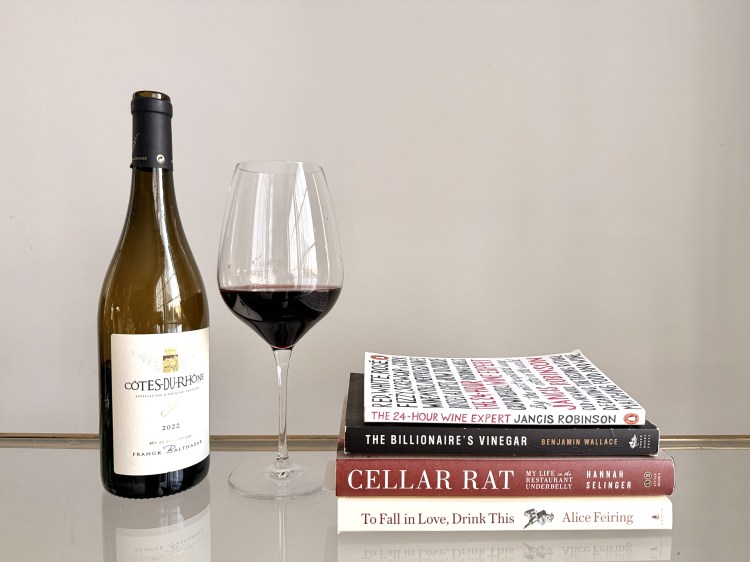
“Reference book” doesn’t sound thrilling, but the most authoritative—and helpful—books on wine are like friendly tutors. Here are a few of my favorite books that I would recommend ordering:
Wine Simple: A Totally Approachable Guide from a World-Class Sommelier by Aldo Sohm, Christine Muhlke
A beautifully illustrated book that’s a pleasure to read and a warm introduction to the basics of wine
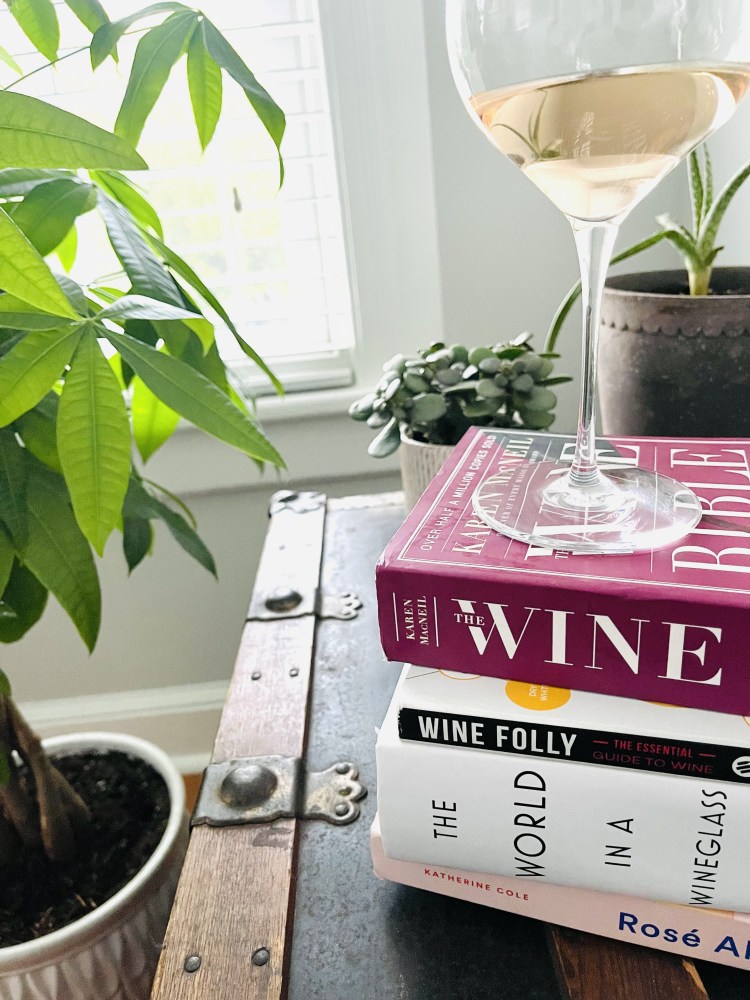
The Wine Bible, 3rd Edition by Karen McNeil
While you could read this book front to back, I find The Wine Bible more useful as a resource when I have a specific question—chances are that the answer is in there.
The 24-Hour Wine Expert: A Guide to the Many Kinds and Flavors of Wine by Jancis Robinson
Written by the renowned British wine critic and author of The Oxford Companion to Wine, Robinson’s pocket read perfectly distills everything you need to know about wine in a simple format. This is a great read for anyone who wants to navigate a wine list without drawing a total blank.
Attend wine events in your area
If you live near a major city, there will be plenty of options available listed on Eventbrite or LocalWineEvents.com.
Local wine bars and restaurants occasionally host special wine dinners with winemakers, so check the event calendars at your favorite restaurants.
Host a wine tasting at home
There are a lot of fun and creative ways to lead your own wine tasting—I’ve shared helpful tips on how to plan a successful tasting in another blog post.
Stay curious
There are so many ways to explore the world of wine.
No matter how long you’ve drinking wine, I think it’s important to refrain from becoming snobbish.
It’s easy to fall into this trap as you refine your palette
There is always something new to discover or revisit.
Wine 101 FAQ
Are international wines better than U.S. domestic wines?
As someone who prefers “old world” wines, there are a number of great American wine producers that deserve praise and recognition.
Just because something comes from France or Italy does not automatically mean it’s superior.
My favorite American AVAs that come to mind are Santa Rita Hills, Santa Barbara County, California; Calistoga, California; Willamette Valley, Oregon; and Upstate New York.
Sandhi Wines and Melville Estate in Santa Rita Hills, Santa Barbara County, CA; Andrew Murray Vineyards in Santa Barbara County, CA; Schramsberg Vineyards in Calistoga, CA; Kelley Fox Wines in Willamette Valley, OR; and Ravines Wine Cellars in Hammondsport, NY, are some of my favorites.
What’s the best way to store wine bottles at home?
For the most part, I wouldn’t worry about storing everyday bottles in a particular way, but be mindful to store them in a cool, dark place (read: not on the kitchen counter in full sunlight).
However, if you are looking to age your wines, I would recommend a wine rack and/or a wine fridge, space allowing, in a cool, dark place.
Research the recommended aging process for your specific wine to ensure that you don’t miss its peak.
Are there any major wine tasting events in the United States?
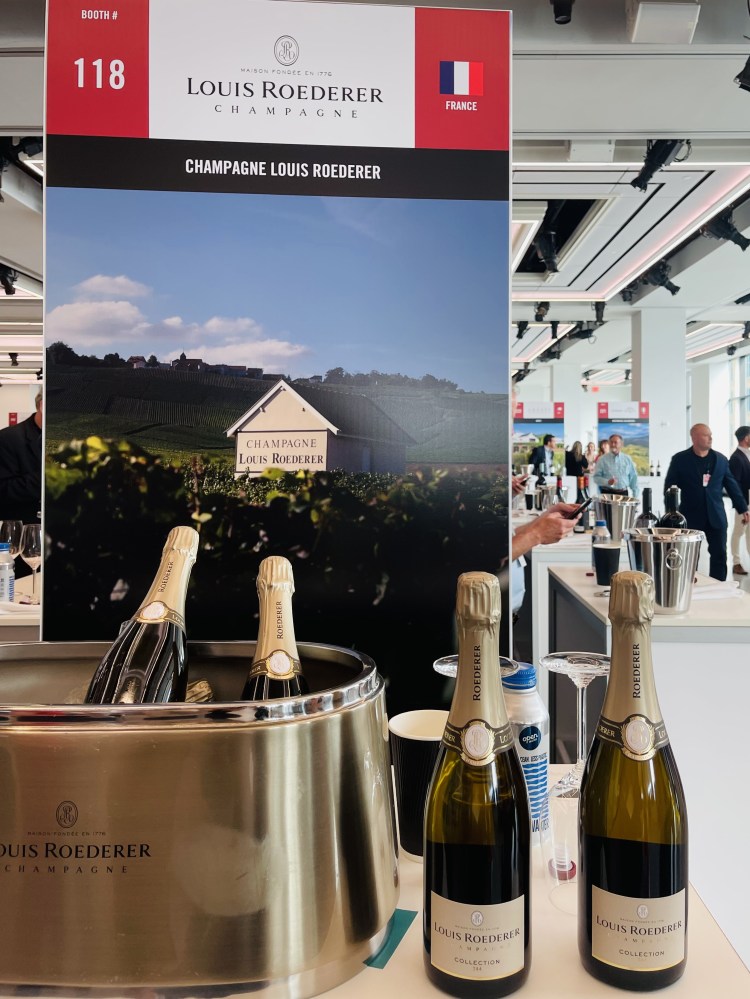
If you’re looking for expo-sized wine tasting events, they do exist in the United States, but are limited to metropolitan areas—New York City, NY; Miami, FL; and throughout California—and mostly limited to larger wine producers who can afford the travel and time to attend.
However, it does tot mean that there isn’t plenty of great wine to taste.
Keep in mind that these wine-tasting events are first and foremost industry trade shows, not intended to be like Drinking Around the World at Epcot. There will be plenty of professionals in the food and beverage and hospitality sectors.
Here are some wine trade shows to check out:
Vinous Icons by Antonio Galloni
A modern wine publication, Vinous Icons events travel to New York City, Miami, London, and beyond.
Great Wines World by James Suckling
A powerhouse for rating wines all over the world, James Suckling and his team bring together a selection of top-rated wines to New York City, San Francisco, Seoul, Tokyo, and Hong Kong.
Lastly, it’s worth noting that most cities and regions have local food and wine festivals that deliver thoughtful, focused experiences.
Working in the Wine and Spirits Industry
Should I consider work in the wine industry?
It depends on what you’re looking for.
I’ve read a few articles that suggest working at your local wine shop part-time to pick up additional knowledge.
This experience, while valuable, may not be for everyone. As someone who worked full-time in retail for over a decade—including nearly one year at a reputable wine shop with incredible management and colleagues—I can tell you that it does require effort and presence. Working at a wine shop was the most physically demanding job that I’ve held. I took HIIT workout classes at F45 to stay strong and help prevent the risk of injury.
If you’re considering working in the wine and spirits industry full-time, it’s fun, but it’s also a grind.
The people who succeed in the industry are usually the ones who really love what they do and love living and breathing wine and spirits.
If you’re looking to become rich, wine and spirits—especially wine—may not be for you. It’s possible to make a decent living, but it will still require a high level of effort that will most likely outweigh your salary. Some positions, such as working for a wine or spirits supplier or working in management, have higher earning potential than being a sales representative at a distributor; however, the responsibilities and the grind required also escalate accordingly.
Similar to the fashion industry, there are so many parts of the wine and spirits industry that aren’t just sales and marketing related. The supply chain for wine and spirits has so many components and processes, so those with expertise in manufacturing, food-chemical science backgrounds, engineering, and operations would be able to find something. And, of course, every corporation needs legal and accounting.
There’s always an opportunity for innovation and disruption in the wine and spirits industry.
What are the biggest pros of working in the wine and spirits industry?
Meeting interesting people, getting to know the communities you serve, and not being stuck at a desk all day… and the product, if you’re fortunate to work for a company that has an excellent range of products.
Professionals in the wine and spirits industry have a great diversity of experience—most people have rich stories about how they got started in the business and the relationships that they’ve built (or burned).
You will never be bored—if you are, then you’re probably doing it wrong.
What are the biggest drawbacks of working in the wine and spirits industry?
Like any sales job, customer service and collaboration are essential to success—as a result, you’re on call 24/7.
There are also plenty of long days spent visiting accounts in the late morning through the early evening, followed by a special event that can run until late.
Spring and early fall are particularly busy periods to secure product placements. This doesn’t mean that summer isn’t busy—it can actually be busier with events focused on marketing and selling through product to increase reorder rates.
It can be hard to juggle personal obligations with work obligations.
And, working with people can be challenging, too.
Is working with people also one of the best things about the job? Yes. Can working with people also be one of the worst things about the job? Also yes. The only consolation I can offer is that the number of positive interactions and relationships usually outweighs the negative ones.
Wine and Spirits Industry FAQ
What does the “three-tier system” refer to in the wine and spirits industry?
The three-tier system refers to the relationship between the supplier, the distributor, and the on- or off- premise account.
Tier 1 (producers/sellers/suppliers) only sell to Tier 2 (distributors/wholesalers), then Tier 2 only sells to Tier 3 (liquor stores, restaurants, bars).
Distributors are the intermediary between the supplier and the account—any pricing, programming, and incentives are discussed and implemented by the distributor.
The supplier is allowed to interact with the account to an extent; however, considerable influence and activities such as direct price-fixing are illegal. Consequences may include fines, penalties, and loss of operating license.
The three-tier system is in place to properly regulate the wine and spirits industry.
For more specifics and legalities, review the National Alcohol Beverage Control Association’s definition.
Do I need to complete any WSET certifications or equivalent certifications to work in the wine and spirits industry?
No, but it is highly recommended to take the WSET I and II to prove that you have a baseline of knowledge, especially if you’re starting out and have limited professional experience.
The Wine & Spirits Education Trust (WSET) is an internationally recognized not-for-profit dedicated to the development and delivery of wine and spirits courses and certifications. WSET certifications are the industry standard to demonstrate comprehension and gain additional credibility.
What is the common professional background of a wine and spirits professional?
For sales and marketing, most professionals have experience working in hospitality or food and beverage at a retail or corporate level.
Is it hard to enter the wine and spirits industry from a different professional background?
It is not impossible to enter the wine and spirits space, but if you’re looking to switch careers, then getting the WSET would be an absolute must. The wine and spirits industry could benefit from diverse talent from other industries, so figure out how your skills can translate to benefit your ideal role.
Meeting people in the wine and spirits industry is also a must. The industry is close-knit, and referrals can go a long way.
What’s the deal with non-alcoholic beverages? Are they even good?
A decade ago—even five years ago, really—there were no respectable non-alcoholic wines or spirits widely available.
As of 2026, the demand for high-quality non-alcoholic beverages has soared in response to the increasing population of consumers giving up alcohol.
While non-alcoholic beverages decrease the market share of consumption of wine and spirits, I believe that the total beverage market will right-size itself, and only companies with quality products and processes will survive. There is a world where non-alcoholic beverages and alcoholic beverages will coexist—we’re starting to see it now.
Anyways.
The biggest gripe of non-alcoholic wines is that they are “dead”—there may be a taste that mimics wine, but the aromas are absent, which is so essential to the experience. Sometimes the texture is also questionable because non-alcoholic wines, especially whites and reds, there’s no dimension.
In my opinion, non-alcoholic sparkling wines are the most wine-like, because manufacturers can inject life into de-alcoholized wine with bubbles. As far as non-alcoholic spirits, there’s more success because of the base of herbs and botanticals.
Can you please share some recommendations for non-alcoholic wine and spirits brands?
There are more brands entering the non-alcoholic beverage space, so follow resources like BevNet, The Spirits Business, etc., for the newest entrants.
Non-Alcoholic Wine
Leitz Eins Zwei – Based in Germany, this is one of the first leaders in non-alcoholic wine that actually tastes good
TOST – Highly underrated tea-based zero-proof sparkling beverage, it’s refreshing and delicious. TOST is available in most major grocery stores.
French Bloom – The only non-alcoholic Champagne on the market—LVMH’s latest addition to their wine and spirits portfolio, this is a serious venture that will continue to grow. And yes, it’s also organic.
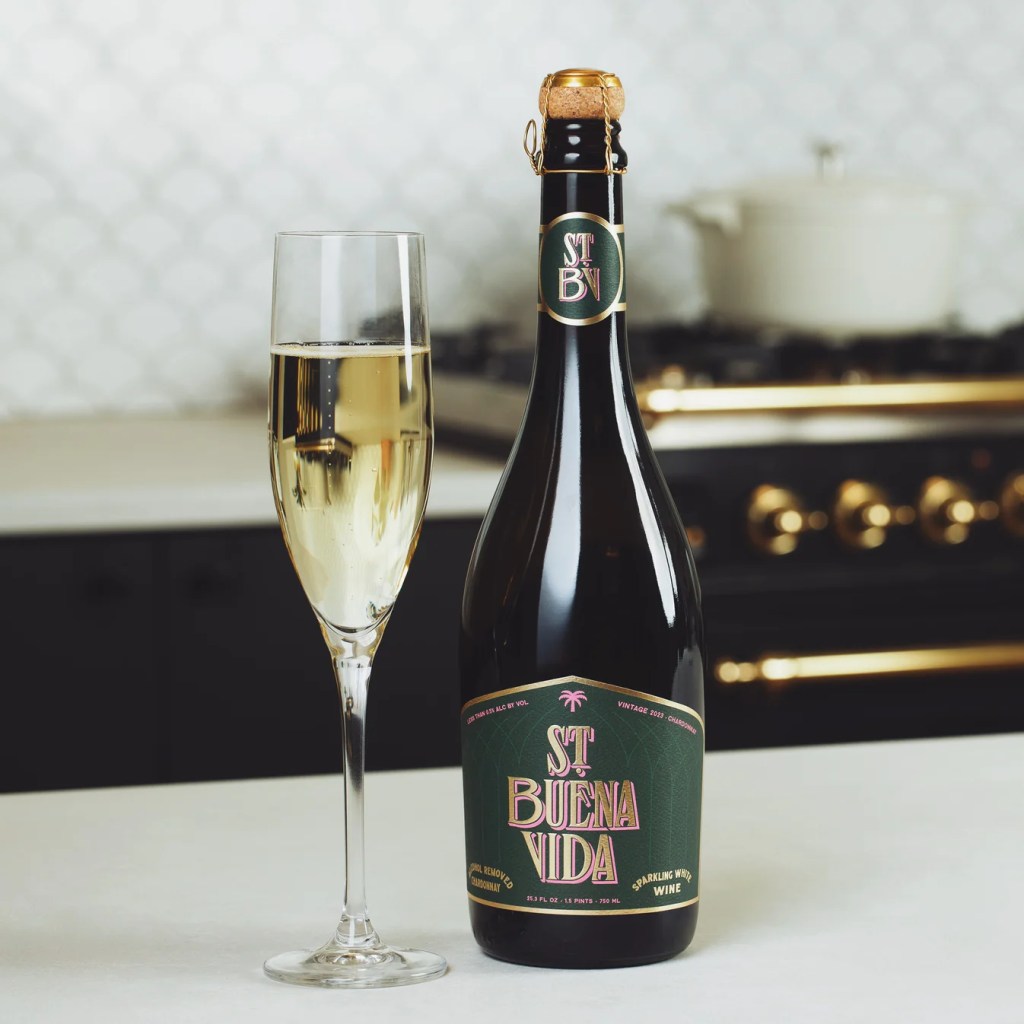
St. Buena Vida – An emerging leader in non-alcoholic sparkling wine, St. Buena Vida uses an innovative process to rebuild the wine by re-introducing the aromas after extracting the alcohol.
Non-Alcoholic Spirits
Seedlip – The most recognizable premium non-alcoholic spirits brand, Seedlip does an incredible job of elevating the definition of “mocktail.”
Amaro Lucano Non-Alcoholic – An impressive, authentic non-alcoholic amaro; probably the best one that I’ve tried so far
Non-Alcoholic Ready-to-Drink Cocktails (RTDs)
St. Agrestis | Non-Alcoholic Phony Negroni
TRIP | Adaptogen-infused beverages, powered by Magnesium, defining the “better for you” beverage category
What are your thoughts about CBD/THC beverages?
Let me start by saying that I don’t feel qualified to comment on it, but…
First thoughts—there’s some great product, there’s obviously a market for it, but there are a lot of unknowns as of early 2026.
It’s also a totally different animal from wine and spirits. Although alcoholic beverages are a regulated substance, the regulations for CBD/THC drinks are still being fleshed out in the United States.
What will the wine and spirits industry look like in 2030?
As I hinted at before, I think we will see a balanced consumption of non-alcoholic and alcoholic beverages.
It will be normal for restaurant guests to imbibe over a mocktail and a cocktail for aperitivo, a bottle of wine with dinner, and end the evening with a digestivo and a non-alcoholic spirit.
I also think that there will be more single-serve, RTD formats of wine and spirits.
In 2026, there will be players who will shrink or die, but great products will withstand the changing landscape.
 New England Parisienne